
Invisible enclosures
Before our very eyes, a major battle for liberty in knowledge and thinking is taking place. Waged by private interests exploiting the tunnel vision that acceleration produces in the rest of us.

Several centuries ago England and then other European countries transitioned from open fields to land owned by a limited number of people. That was a common resource transformed into private property, which subsequently structured much of the industrial economy and through it our modern techno-scientific world. Today another common resource, which has been a driver of progress since Enlightenment and scholars like Erasmus, is being challenged much like yesterday’s open fields. Let’s see why this matters a great deal.
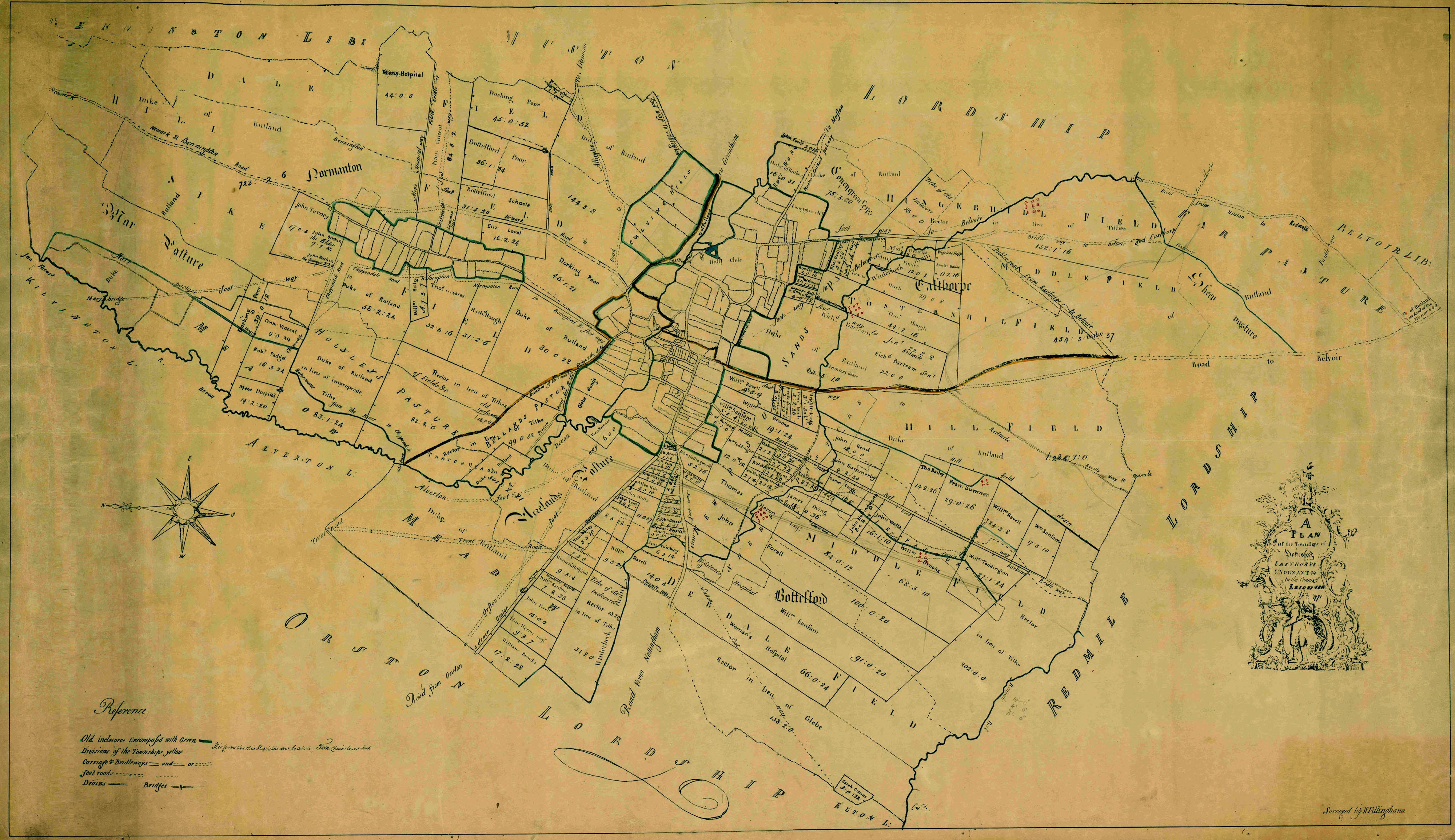
Enclosures: exploitation or progress?
When Arthur Young rode through England in the 1770s documenting the improvements brought by enclosure, he wasn’t lying. Wheat yields on enclosed land in Childersley stood at 24 bushels per acre. Sixteen on adjacent common-field land, on “perfectly similar soil.” The gap was real. The “improvers” had data, and they used it relentlessly – in pamphlets, in parliamentary testimony, in the correspondence of the Board of Agriculture.
Progress required enclosure. Enclosure served the nation. The open fields were an anachronism.They were also conducting one of the largest wealth transfers in English history. Parliamentary enclosure cost a minimum of £12 per acre to implement – lawyers, surveyors, commissioners, fencing, tithe compensation. Nearly five times the annual income of a 20-acre farm. Smallholders who couldn’t pay the process costs had to sell their new allotments to wealthier neighbours. The Gini coefficient of land value rose 30 percentage points in enclosed parishes relative to unenclosed ones. Jeanette Neeson’s archival work documented a 21% decline in small landowners in Northamptonshire after enclosure, with no comparable decline in unenclosed villages. In Denmark, land inequality rose from a Gini of 0.32 in 1682 to 0.67 by 1850 – a level comparable to modern South Africa – following analogous reforms. Danish historian Kjærgaard called it economical expropriation of the rural poor. He was not using the term loosely.
Two things were true simultaneously: enclosure increased output, and it concentrated wealth. The improvers were right about the first, and strategically silent about the second. Their productivity data was genuine. Their public interest framing was not.
We are living through the same argument. Dressed in different clothes, spoken in a different register, with different lawyers and different commissioners – but structurally identical.
The claims of major AI and tech players
Today, knowledge, much more than raw data, is the asset of interest that is a foundational ingredient of all other productive activities – much like land as we were entering the era of industrialized farming. That explains why there has been such a movement to host papers from public fundamental research on private commercial servers, and also why that has sparked its fair share of protests from the academic world.
At another level, something similar, although far more insidious, is in play with the claims of major AI and tech platforms that relaxing the rules of copyright and intellectual property to enable unrestrained technical progress. They tell us that protecting authors, creators and rightful owners is unnecessary rigidity and an obstacle to progress. That access to knowledge, data, and creative output should be open, fluid, available to whoever can – or has the financial and technical capital to – put it to productive use. That enclosure – their word – is the enemy of innovation.
This is the rhetoric of the improvers, updated for the information economy. The productivity claim may even be partially true. AI systems trained on vast corpora of human creative and intellectual output do appear to accelerate certain kinds of knowledge work. The 45% yield increase that Heldring, Robinson, and Vollmer attribute to Parliamentary enclosure was not fabricated. Neither are the capabilities of large language models. The “improvers” of both eras are arguing from real evidence.
The question is not whether the productivity claim holds. The question is what it is being used to justify. And what consequences they strive to keep out of the public eye.
Let us take the principle of open access seriously and apply it consistently. If open access to knowledge, data, and creative output is a public interest imperative – and it is – then it applies universally, not selectively. That means:
Full open sourcing of training data, model weights, and code for any AI system operating at scale in our societies and economies. If creative work was a commons that anyone could enclose for productive use, then the systems built from it are a commons too. The logic runs both ways or it runs neither.
Mandatory compliance with open API standards enabling genuine interoperability, data portability, and integration across all platforms. Your contacts, your content, your history belong to you – not to Meta, Microsoft, or X. You should be able to reach users of those platforms without having an account with them or surrendering your data to them, much as you can call people on any telecoms network without caring who their operator is or what brand of handset they hold. That this seems radical is itself revealing: we have accepted a state of platform lock-in so total that the baseline expectations of the analogue world – number portability, interconnection, common carrier obligations – are now aspirational demands.
Open access to the algorithmic and financial infrastructure that shapes markets, credit, health, and public information. The enclosures of the eighteenth century enclosed physical commons. The enclosures of the twenty-first century enclose the informational commons through which modern societies make collective decisions. The asymmetry of access is not incidental. It is the product.
This is not a radical fringe position. It is the logical completion of the argument the tech industry is making. You cannot claim openness as a principle when consuming and enclosure as a right when distributing. That is not a philosophy. That is a business model dressed up as one.
What is being fenced off?
Knowledge assets and content are only the most visible layer of the enclosure. It is the common land you can point to on a map. But the historical parallel runs deeper, and understanding how deep requires going back to what was actually lost in England between 1750 and 1850.
The parliamentary enclosures didn’t only take land. They took a way of organising work: the strip-field system, the commons grazing calendar, the seasonal rhythms of collective labour, the customary rights to gather fuel and glean after harvest. E.P. Thompson called this the moral economy – not a sentimental phrase, but a precise description of the expectations, norms, and solidarities through which rural communities reproduced themselves economically and socially. The moral economy was not inefficient. Joan Thirsk, Robert Allen, and M.E. Turner have documented extensively that open-field communities were already adopting improved rotations, adjusting cropping patterns, experimenting with clover and turnips – without enclosing. Enclosure was not necessary for innovation. It was necessary for the particular distribution of innovation’s gains that large landowners preferred.
The moral economy didn’t survive the enclosures not because it failed on its own terms, but because it was incompatible with the institutional form that enclosure enforced: individual ownership, heritable title, fenced exclusion. What was destroyed was a way of being in relation to land, to time, to other people, and to the future. Thompson’s peasants were not irrational in resisting. They understood that what was at stake was not just their acreage, but their mode of existence.
It would take over a century for an economist, Elinor Ostrom, to be awarded the Nobel prize in economics for developing the theory and principles upon which the commons can be governed, neither as government-controlled nor as privately-owned assets, by their stakeholders. That governance of the commons can be effective, efficient and resilient, which is a combination that is becoming increasingly necessary as the planetary resources are being excessively exploited and supply chains made very fragile, in part because of excessive focus on efficiency.
What is being enclosed today is not only content. It is ways of working – increasingly mediated by platforms that treat non-standard processes as inherently undesirable, interoperability as a competitive threat, that make migration costly, that structure dependency through APIs which can be revoked unilaterally and Terms of Service that change overnight. It is ways of thinking – shaped by algorithmic recommendation systems optimised for engagement over understanding, for velocity over depth, for the reinforcement of existing beliefs over their productive disruption. And increasingly, it is thinking itself.
AI systems trained on the accumulated cognitive output of human civilisation – its science, its literature, its argument, its doubt – are being deployed as the default interface through which we write, reason, remember, decide, and make sense of the world. This is not inherently illegitimate. But when those systems are owned by a handful of corporations, when their weights are proprietary, when their training data is contested, when their outputs shape the epistemic environment of entire professional fields without accountability or recourse – what is being enclosed is not land. It is the cognitive commons. The shared substrate of how a civilisation thinks.
Thompson’s peasants lost the right to graze cattle on the common. We risk losing something more intimate: the capacity to think in ways that are not pre-shaped by systems we do not own, cannot inspect, and did not design.
A selection problem
The Heldring-Robinson-Vollmer study on English Parliamentary enclosure contains a finding that deserves more attention than it usually receives. Their headline figure – 45% increase in yields – applies to the parishes that most needed forcing. When you estimate the average treatment effect across all parishes (rather than the local average treatment effect for the most recalcitrant “complier” parishes), the productivity benefit drops by 75–78%. Parishes that had already enclosed voluntarily, through agreement among landholders, had less to gain from the Parliamentary process. The strongest case for enclosure rested on the hardest cases – precisely where coercion was most disproportionate to actual productivity need.
Observe the structure of the current argument. The case for open access to creative works is strongest precisely where creators cannot afford to resist – where the legal and financial costs of enforcement are prohibitive, where the asymmetry between platform and individual is greatest, where the formal process is available in principle and inaccessible in practice. As with smallholders in 1790 who could not pay £12 per acre to fence their allotment, the right is formally acknowledged. The costs of exercising it are yours.
This is not a coincidence. It is the mechanism. The enclosures proceeded parish by parish, act by act, each one individually defensible on efficiency grounds, the cumulative redistribution visible only in the aggregate, only in retrospect. The current wave of enclosures proceeds platform by platform, terms-of-service revision by revision, training run by training run. Each step is locally justifiable. The pattern requires distance to see.
The logical trap
The tech industry has, in its enthusiasm for open access to creative work, made the historical case against itself. It has elevated openness to a principle. Principles are not selective. They do not apply to inputs and dissolve at the point of output. Either open access serves the greater good – in which case it applies to systems, data, weights, algorithms, and infrastructure, not only to the creative work from which those systems were built – or it is not a principle. It is a position.
Arthur Young was not dishonest about yields. He was dishonest about what yields were being used to justify. The current improvers may not be entirely dishonest about capability – they are, somewhat as the hype cycles would otherwise be less extravagant. They are wilfully dishonest about what capability is being used to justify.
The greater interest of society is comprehensive, non-discriminatory access to the resources that enable innovation, liberty, and freedom from cognitive lock-in. Copyright reform, open APIs, platform interoperability, and algorithmic transparency are not separate policy debates. They are one. The English enclosures were eventually constrained – not by the improvers’ change of heart, but by the slow accumulation of political pressure from those whose moral economy had been destroyed, and by the belated recognition that concentrated rural landholding was socially and politically unsustainable.
The current enclosures will eventually be constrained too. The question is how much of the cognitive commons is fenced off before that happens, and whether the institutional memory of what we lost survives long enough to rebuild it.